Review: 'Northanger Abbey' a better effort for 'Masterpiece' series
David Wiegand, Chronicle Staff Writer
Saturday, January 19, 2008
If any of Jane Austen's novels could be acceptably adapted for a 90-minute film, "Northanger Abbey" is probably the best candidate. After an unfortunate launch of its three-month Jane Austen series with Sunday's "Persuasion," PBS redeems itself with a nicely pitched version of the author's first completed novel as part of "Masterpiece" on Sunday night.
"Northanger" is interesting in part because, in addition to being an amusing send-up of Gothic romance novels, it is a sketchbook for the plots and characters that would come to full bloom in Austen's later novels. There is, of course, a young, somewhat plain heroine who is pursued by a perfectly pleasant but bland chap, while her heart flutters for a more aloof man. And, of course, there is the theme of money versus sincerity, character and true love.
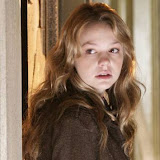
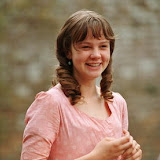
But "Northanger" also has its own charms, slight though they may be in comparison with Austen's later masterpieces. Catherine Morland (Felicity Jones) is a young woman with a vivid imagination and a young girl's fondness for Gothic romances. The daughter of a country clergyman, she is dispatched to provide company for wealthy family friends the Allens (Desmond Barrit and Sylvestra Le Touzel) during the social season in Bath. Catherine meets the Thorpe siblings, Isabella (Carey Mulligan), who is already smitten by Catherine's older brother, and John (William Beck), who quickly develops a crush on Catherine.
For her part, however, Catherine is already half in love with brooding Henry Tilney (JJ Feild), whose overbearing father, Gen. Tilney (Liam Cunningham), encourages the romance because he thinks Catherine will receive a large fortune from the Allens.
Money and love are, of course, at constant odds in "Northanger Abbey." Henry's sister Eleanor (Catherine Walker) is in love with a young man who, unfortunately, is the second son in the family and, thus, not slated to receive much of an inheritance. Accordingly, the general has forbidden the marriage. And Henry's character, like many Austen "heroes," is ambiguous. While he seems genuinely charmed by Catherine, he does allow that the best thing he could do would be to fall in love with a girl who comes with a large dowry. While the complexities of this character type would be more credibly explored by Austen in later figures such as "Persuasion's" Capt. Wentworth, and, of course, Mr. Darcy of "Pride and Prejudice," we can, again, see their beginnings in Henry Tilney.
While later Austen heroines would show a bit more sophistication, Catherine often comes off as a more than just a little naive. Her fondness for Gothic romances has led her to imagine that highwaymen are going to overtake her carriage on the way to Bath at any moment. That notion can be easily dismissed as the musings of a silly schoolgirl, but later, while staying at Northanger Abbey with the Tilneys, she endangers her relationship with Henry by conjuring up the idea that his father may, in fact, have murdered his wife. At various points in the "Masterpiece" film, Catherine's imaginings are dramatized as part of the action. In fact, the first time it happens, you'll probably believe that her carriage really is being overtaken by highwaymen. While the scenes may seem silly, they correctly represent Austen's gentle satire of this overheated genre. In fact, there's a running debate in the story about whether it is in fact dangerous to read too many novels.
While "Persuasion" is a bigger challenge to try to squeeze into 90 minutes, the real difference between that film and "Northanger" is the latter's consistency of high-quality performances, a careful and attentive adaptation by Andrew Davies and solid direction by Jon Jones. Jones is quite winning as Catherine, although she does seem a bit too young to know whether she's actually in love or not. That's fine for the earlier scenes, but it becomes a bit of a stretch when Tilney is actively courting her.
As an aside, let it be known that in its finite wisdom, PBS has decided to truncate the name of its Sunday night warhorse from "Masterpiece Theatre" to "Masterpiece." In a similar vein, no doubt we can expect future PBS offerings such as "Myst," "Live From Linc," "Great Perf" and, for the kids, "Cliff the Big."
http://www.sfgate.com/cgi-bin/article.cgi?f=/c/a/2008/01/19/DDVDUF61U.DTL
Showing posts with label Northanger Abbey. Show all posts
Showing posts with label Northanger Abbey. Show all posts
Wednesday, 13 February 2008

'Northanger Abbey' is lighthearted Austen
'Northanger Abbey' is lighthearted Austen
By Matthew Gilbert, Globe Staff | January 19, 2008
This new PBS adaptation of Jane Austen's "Northanger Abbey," tomorrow at 9 p.m. on Channel 2, was written by Andrew Davies. If you're a fan of filmed classic novels, you've probably already admired Davies' work as the screenwriter of some of PBS's best "Masterpiece Theatre" productions - "Bleak House," "Middlemarch," "The Way We Live Now," and the "Pride and Prejudice" - that would be the 1995 version starring Jennifer Ehle and Colin Firth, with all due respect to Sir Laurence O.
Davies has a pleasing way of staying true to his masterful sources in spirit and detail, never imposing a contemporary vision onto them in the way Jane Campion and Laura Jones did in 1996 with "The Portrait of a Lady," by making the Henry James novel into a tale of domestic abuse. And yet Davies knows how to clear off the dust, too, to translate all the 19th-century manners and obscurities for today's audiences. There's a nice scene early in "Northanger Abbey" when heroine Catherine Morland and hero Henry Tilney are talking about flirting while flirting, and Davies makes their clever "meta" exchange - talking about talking - feel like a Victorian invention.
There are things to like about Davies' "Northanger Abbey," even while it is flawed and superficial, particularly when the storyline collapses awkwardly toward the end. It is not one of Davies' most consistent adaptations, but still, it's an easy-to-watch introduction to one of Austen's lesser-known novels. Austen wrote "Northanger Abbey" early in her career but, after a publishing misadventure, it was not released until after her death. About an imaginative young woman who reads too many Gothic novels, the story is Austen's most lighthearted.
Catherine Moreland (Felicity Jones), an impressionable 17-year-old from a large, not particularly wealthy family, is brought into Bath leisure society by family friends. There she meets two very different pairs of siblings. Isabella Thorpe (Carey Mulligan) and John Thorpe (William Beck) are lively and, perhaps, scheming. Eleanor Tilney (Catherine Walker) and Henry Tilney (JJ Feild) are quieter, more mysterious, and more dignified. Having only learned about life through heightened, supernatural novels, Catherine is ill-equipped to parse out the good and the bad in the Thorpes and the Tilneys.
The movie gives us black-and white flashes of Catherine's vivid fantasies - scenarios in which she is captured by thieves, Henry rescues her, and she swoons in quasi-sexual ecstasy and fear. In the novel, Austen is teasing Catherine, and Davies carries that gently mocking tone into the movie through an authorial voiceover that musingly tells us, "Something must and will happen to throw adventure in her way."
At one point while staying with the Tilneys at their large home, Northanger Abbey, Catherine imagines that their father, a stiff general, was in some way responsible for the death of their late mother. Swept up in her sense of drama, she shares her theory with Henry and appears to trigger a series of unpleasant events. By that moment, though, the movie has already given up on its storytelling efforts and on making the secondary characters anything more than sketches. Davies and director Jon Jones seem to be saying, "OK, you know where this is all going, so let's just go there. You've seen an Austen movie, that's good enough."
Part of "The Complete Jane Austen" presented by "Masterpiece" this season, "Northanger Abbey" probably needs more than 90 minutes to do justice to Austen's novel. While it is a fairly obvious piece of work, in that the perceptions of characters generally match their realities, the story still deserves enough time to explore more thoroughly how the Thorpes' behavior affects our heroine, and how our heroine grows. As she learns not to be so easily influenced by others and by books, we need to know more about the allure of those influences.
Matthew Gilbert can be reached at gilbert@globe.com.
http://www.boston.com/ae/tv/articles/2008/01/19/northanger_abbey_is_lighthearted_austen/
By Matthew Gilbert, Globe Staff | January 19, 2008
This new PBS adaptation of Jane Austen's "Northanger Abbey," tomorrow at 9 p.m. on Channel 2, was written by Andrew Davies. If you're a fan of filmed classic novels, you've probably already admired Davies' work as the screenwriter of some of PBS's best "Masterpiece Theatre" productions - "Bleak House," "Middlemarch," "The Way We Live Now," and the "Pride and Prejudice" - that would be the 1995 version starring Jennifer Ehle and Colin Firth, with all due respect to Sir Laurence O.
Davies has a pleasing way of staying true to his masterful sources in spirit and detail, never imposing a contemporary vision onto them in the way Jane Campion and Laura Jones did in 1996 with "The Portrait of a Lady," by making the Henry James novel into a tale of domestic abuse. And yet Davies knows how to clear off the dust, too, to translate all the 19th-century manners and obscurities for today's audiences. There's a nice scene early in "Northanger Abbey" when heroine Catherine Morland and hero Henry Tilney are talking about flirting while flirting, and Davies makes their clever "meta" exchange - talking about talking - feel like a Victorian invention.
There are things to like about Davies' "Northanger Abbey," even while it is flawed and superficial, particularly when the storyline collapses awkwardly toward the end. It is not one of Davies' most consistent adaptations, but still, it's an easy-to-watch introduction to one of Austen's lesser-known novels. Austen wrote "Northanger Abbey" early in her career but, after a publishing misadventure, it was not released until after her death. About an imaginative young woman who reads too many Gothic novels, the story is Austen's most lighthearted.
Catherine Moreland (Felicity Jones), an impressionable 17-year-old from a large, not particularly wealthy family, is brought into Bath leisure society by family friends. There she meets two very different pairs of siblings. Isabella Thorpe (Carey Mulligan) and John Thorpe (William Beck) are lively and, perhaps, scheming. Eleanor Tilney (Catherine Walker) and Henry Tilney (JJ Feild) are quieter, more mysterious, and more dignified. Having only learned about life through heightened, supernatural novels, Catherine is ill-equipped to parse out the good and the bad in the Thorpes and the Tilneys.
The movie gives us black-and white flashes of Catherine's vivid fantasies - scenarios in which she is captured by thieves, Henry rescues her, and she swoons in quasi-sexual ecstasy and fear. In the novel, Austen is teasing Catherine, and Davies carries that gently mocking tone into the movie through an authorial voiceover that musingly tells us, "Something must and will happen to throw adventure in her way."
At one point while staying with the Tilneys at their large home, Northanger Abbey, Catherine imagines that their father, a stiff general, was in some way responsible for the death of their late mother. Swept up in her sense of drama, she shares her theory with Henry and appears to trigger a series of unpleasant events. By that moment, though, the movie has already given up on its storytelling efforts and on making the secondary characters anything more than sketches. Davies and director Jon Jones seem to be saying, "OK, you know where this is all going, so let's just go there. You've seen an Austen movie, that's good enough."
Part of "The Complete Jane Austen" presented by "Masterpiece" this season, "Northanger Abbey" probably needs more than 90 minutes to do justice to Austen's novel. While it is a fairly obvious piece of work, in that the perceptions of characters generally match their realities, the story still deserves enough time to explore more thoroughly how the Thorpes' behavior affects our heroine, and how our heroine grows. As she learns not to be so easily influenced by others and by books, we need to know more about the allure of those influences.
Matthew Gilbert can be reached at gilbert@globe.com.
http://www.boston.com/ae/tv/articles/2008/01/19/northanger_abbey_is_lighthearted_austen/
Masterpiece Theatre: Northanger Abbey (2007)
Masterpiece Theatre: Northanger Abbey (2007)
WGBH // Unrated // $24.95 // January 22, 2008
Review by Paul Mavis | posted January 21, 2008
WGBH Boston Video and Granada International have released Northanger Abbey, the latest Jane Austen adaptation that premiered this past spring on Britain's ITV Channel. Streamlined to a sprightly 86 minutes, this enjoyable little romp make take liberties with Austen's affectionate parody of Gothic novels, but it's fairly faithful to the spirit of her novel, providing a diverting lark that fans of Austen - provided they're not purist sticklers - should find entertaining.
Catherine Moreland (Felicity Jones), a 17-year-old beauty-in-waiting from rural Fullerton, is given an invitation by her family friends, Mr. and Mrs. Allen (Desmond Barritt and Sylvestra Le Touzel), to join them in Bath, England, a spa city of culture, entertainment, and high society. The naive Catherine, who is obsessed with romantic Gothic novels, has one of her primal dreams come true when she meets handsome, wealthy clergyman Henry Tilney (J.J. Feild) at a society ball. Tilney shows obvious interest in the beautiful country girl, but Catherine has reason to believe he may just be a passing fancy, since he soon leaves Bath, with no explanation, for several days. No matter, though; another young man, John Thorpe (Willam Beck), also watches Catherine at the ball.
When Catherine is introduced to Isabella Thorpe (Carey Mulligan), a naughty new best friend is made. Isabella, a saucy minx whose brother John knew Catherine's brother James (Hugh O'Conor) in college, immediately sets her sights on ensnaring James, incorrectly assuming the Morelands to be potentially wealthy when the Allens, who are childless, leave their fortunes to Catherine and James. Interest in James doesn't stop Isabella, who also loves Gothic romances - the more salacious the better - from flirting with Henry's dashing, cold older brother, Captain Frederick Tilney (Mark Dymond), and eventually becoming his lover. Catherine, despite attempts by John Thorpe to press himself on her, renews her courtship with Henry, which is good news to Henry's father, General Tilney (Liam Cunningham), who is led to believe by a jealous John that Catherine is indeed wealthy (and therefore a safe match for wealthy Henry). Inviting Catherine up to their forbidding mansion, Northanger Abbey, for several weeks, stern General Tilney initiates with his invitation a series of events that will turn Catherine and Henry's life upside-down.
SPOILERS ALERT!
Last week, I reviewed one of the other new Jane Austen adaptations that ITV kicked off their Jane Austen Season last spring; three films that I understand will appear on the newly rebooted Masterpiece Theatre (you can read my review of Persuasion here). Like that film version, Northanger Abbey has been retooled specifically to appeal to new viewers who may find older film versions of Austen's novels staid or too dense. Gone is quite a bit of Austen's profuse backgrounds of various characters - and the resulting nuances, as well. Events have been compressed, or invented out of whole cloth, and the energy level has been jacked up to reinvigorate viewers more accustomed to the stately pace of previous Masterpiece Theatre presentations.
Naturally, there are those who find such "improvements" not improvements at all, but those same viewers usually find fault with any film adaptation of a literary classic. While Persuasion was beautifully naked in its fever-like emotions, creating a direct plea to the audience to connect with its heroine, Northanger Abbey is quite different in tone, with a fast-paced comedic sensibility that may not be pure Austen, but which comes close to what she was trying to achieve with her novel. Northanger Abbey, her first completed novel, was a gentle parody of the Gothic form that still featured submerged, stinging Austen commentary on the dynamics of men's and women's relationships, as well as on the nakedly venal jockeying of the various classes in the pursuit of profitable marriages. Her "heroine" was an inversion of the typical Gothic heroine, in that she turned out to be completely wrong in her dangerous, highly romantic assumptions about the Tilney family. Suffused with the sensibilities of the coarse, common Gothic novels that were considered declasse for a young woman of her position, Catherine assumes that something terrible happened to General Tilney's wife, who died years before. Taking the word of flighty Isabella and scheming John Thorpe, Catherine eventually works herself up into believing that the General committed murder, with the foreboding edifice of Northanger Abbey fueling her fictional obsessions. Among the several thematic elements that Austin attempted to expound on, the central one was illustrating how real-life events are far more prosaic in details - and yet far more devastating in their life-long impact - than any overheated, cardboard histrionics of a Gothic novel.
And on illustrating that central theme, Northanger Abbey is fairly successful. Providing us with brief, delirious little dream sequences courtesy of Catherine's fevered imagination, the viewer immediately understands that almost all of Catherine's thinking has been adversely affected by the newly popular medium of the novel. The suspense of the film comes from our wondering if she'll snap out of her dreamworld long enough to truly understand the players on the scorecard, before her actions - again, based on highly improbably fictional conceits - irreparably harm her real-life future. While the film shifts occasionally in tone, with the earlier sequences veering dangerously close to an almost-slapstick ambience, Northanger Abbey is fairly consistent in its aims. Those Masterpiece Theatre fans not accustomed to screenwriter Andrew Davies' more flamboyant additions - and severe eliminations - may initially pass off Northanger Abbey as a Avon romance novel come to life. But the spoofy, obvious comedic tone of the piece is wholly self-conscious and intentional, and entirely in keeping with Austen's original intention.
Evidently, some English viewers were put off by the Irish location work (for whatever reasons - perhaps monetary - the more expensive prospect of dressing authentic Bath locations for period filming was abandoned). But the skimping won't bother the majority of U.S. viewers who won't know the difference, and as with Persuasion, the production design and lensing is quite nice, with all costumes and set decorations up to par. The acting, as with most British period productions, is exemplary. Felicity Jones pulls off the neat trick of appearing both country-bumpkinish naive and sexually desirable - perfect for her character. She handles the comedy well, and has nice, heated chemistry with Feild (he looks rather disconcertedly at times like Jude Law). He's quite adept at getting across Henry's cynicism, while providing female viewers with the required handsome, wistful romanticism called for in this type of film. Carey Mulligan is ideal as the sexually active, willful, scheming Isabella, and William Beck is suitably odious as the opportunist John Thorpe. Directed by Jon Jones in a manner befitting this abbreviated, amped-up adaptation, the cast is obviously having fun with this speedy little comedy - which translates well to the viewer.
Just a small note, however, concerning this U.S. disc version of Northanger Abbey. According to some sources I've read, there may be a scene or scenes in the original British TV version that are not present here. Specifically, there's a sequence where Isabella and Catherine discuss a rather torrid Gothic novel, The Monk, which leads to a dream sequence where Catherine, in her bath, imagines Henry coming to her naked. The initial discussion between the two girls is here, leading to a brief shot of sleeping Catherine writhing in obvious sexual pleasure on her bed, but an abrupt cut to an opera performance may indicate that the subsequent dream sequence was cut. This particular DVD times out at 86 minutes, while other sources say the film was 90 minutes in Britain -- perhaps this accounts for the lost sequence. Again, I stress "may," because I haven't seen the original British TV version.
The DVD:
The Video:
The anamorphically enhanced, 1.78:1 widescreen image for Northanger Abbey looks scrumptious, with a beautifully hued color scheme and no compression issues in the super-sharp picture.
The Audio:
The Dolby Digital English 2.0 stereo audio mix is quite adequate for this dialogue-heavy presentation. All lines are heard crisply and cleanly. Close-captioning is available.
The Extras:
Unfortunately, there are no extras for Northanger Abbey, which is a shame, considering the fact that I'm sure promotional materials were shot for such a prestigious TV production.
Final Thoughts:
Purists may squawk, but I rather enjoyed the heated ridiculousness of Northanger Abbey, which takes Austen's gentle parody of Gothic novels, and turns it into an appropriately-toned bodice ripper - at least at the start. Austen's social commentary is still there, though, albeit in severely abbreviated form, and the final wrap-up is suspensefully handled. A good introduction to the novel, and entertaining in its own right. I recommend Northanger Abbey.
http://www.dvdtalk.com/reviews/print.php?ID=32085
WGBH // Unrated // $24.95 // January 22, 2008
Review by Paul Mavis | posted January 21, 2008
WGBH Boston Video and Granada International have released Northanger Abbey, the latest Jane Austen adaptation that premiered this past spring on Britain's ITV Channel. Streamlined to a sprightly 86 minutes, this enjoyable little romp make take liberties with Austen's affectionate parody of Gothic novels, but it's fairly faithful to the spirit of her novel, providing a diverting lark that fans of Austen - provided they're not purist sticklers - should find entertaining.
Catherine Moreland (Felicity Jones), a 17-year-old beauty-in-waiting from rural Fullerton, is given an invitation by her family friends, Mr. and Mrs. Allen (Desmond Barritt and Sylvestra Le Touzel), to join them in Bath, England, a spa city of culture, entertainment, and high society. The naive Catherine, who is obsessed with romantic Gothic novels, has one of her primal dreams come true when she meets handsome, wealthy clergyman Henry Tilney (J.J. Feild) at a society ball. Tilney shows obvious interest in the beautiful country girl, but Catherine has reason to believe he may just be a passing fancy, since he soon leaves Bath, with no explanation, for several days. No matter, though; another young man, John Thorpe (Willam Beck), also watches Catherine at the ball.
When Catherine is introduced to Isabella Thorpe (Carey Mulligan), a naughty new best friend is made. Isabella, a saucy minx whose brother John knew Catherine's brother James (Hugh O'Conor) in college, immediately sets her sights on ensnaring James, incorrectly assuming the Morelands to be potentially wealthy when the Allens, who are childless, leave their fortunes to Catherine and James. Interest in James doesn't stop Isabella, who also loves Gothic romances - the more salacious the better - from flirting with Henry's dashing, cold older brother, Captain Frederick Tilney (Mark Dymond), and eventually becoming his lover. Catherine, despite attempts by John Thorpe to press himself on her, renews her courtship with Henry, which is good news to Henry's father, General Tilney (Liam Cunningham), who is led to believe by a jealous John that Catherine is indeed wealthy (and therefore a safe match for wealthy Henry). Inviting Catherine up to their forbidding mansion, Northanger Abbey, for several weeks, stern General Tilney initiates with his invitation a series of events that will turn Catherine and Henry's life upside-down.
SPOILERS ALERT!
Last week, I reviewed one of the other new Jane Austen adaptations that ITV kicked off their Jane Austen Season last spring; three films that I understand will appear on the newly rebooted Masterpiece Theatre (you can read my review of Persuasion here). Like that film version, Northanger Abbey has been retooled specifically to appeal to new viewers who may find older film versions of Austen's novels staid or too dense. Gone is quite a bit of Austen's profuse backgrounds of various characters - and the resulting nuances, as well. Events have been compressed, or invented out of whole cloth, and the energy level has been jacked up to reinvigorate viewers more accustomed to the stately pace of previous Masterpiece Theatre presentations.
Naturally, there are those who find such "improvements" not improvements at all, but those same viewers usually find fault with any film adaptation of a literary classic. While Persuasion was beautifully naked in its fever-like emotions, creating a direct plea to the audience to connect with its heroine, Northanger Abbey is quite different in tone, with a fast-paced comedic sensibility that may not be pure Austen, but which comes close to what she was trying to achieve with her novel. Northanger Abbey, her first completed novel, was a gentle parody of the Gothic form that still featured submerged, stinging Austen commentary on the dynamics of men's and women's relationships, as well as on the nakedly venal jockeying of the various classes in the pursuit of profitable marriages. Her "heroine" was an inversion of the typical Gothic heroine, in that she turned out to be completely wrong in her dangerous, highly romantic assumptions about the Tilney family. Suffused with the sensibilities of the coarse, common Gothic novels that were considered declasse for a young woman of her position, Catherine assumes that something terrible happened to General Tilney's wife, who died years before. Taking the word of flighty Isabella and scheming John Thorpe, Catherine eventually works herself up into believing that the General committed murder, with the foreboding edifice of Northanger Abbey fueling her fictional obsessions. Among the several thematic elements that Austin attempted to expound on, the central one was illustrating how real-life events are far more prosaic in details - and yet far more devastating in their life-long impact - than any overheated, cardboard histrionics of a Gothic novel.
And on illustrating that central theme, Northanger Abbey is fairly successful. Providing us with brief, delirious little dream sequences courtesy of Catherine's fevered imagination, the viewer immediately understands that almost all of Catherine's thinking has been adversely affected by the newly popular medium of the novel. The suspense of the film comes from our wondering if she'll snap out of her dreamworld long enough to truly understand the players on the scorecard, before her actions - again, based on highly improbably fictional conceits - irreparably harm her real-life future. While the film shifts occasionally in tone, with the earlier sequences veering dangerously close to an almost-slapstick ambience, Northanger Abbey is fairly consistent in its aims. Those Masterpiece Theatre fans not accustomed to screenwriter Andrew Davies' more flamboyant additions - and severe eliminations - may initially pass off Northanger Abbey as a Avon romance novel come to life. But the spoofy, obvious comedic tone of the piece is wholly self-conscious and intentional, and entirely in keeping with Austen's original intention.
Evidently, some English viewers were put off by the Irish location work (for whatever reasons - perhaps monetary - the more expensive prospect of dressing authentic Bath locations for period filming was abandoned). But the skimping won't bother the majority of U.S. viewers who won't know the difference, and as with Persuasion, the production design and lensing is quite nice, with all costumes and set decorations up to par. The acting, as with most British period productions, is exemplary. Felicity Jones pulls off the neat trick of appearing both country-bumpkinish naive and sexually desirable - perfect for her character. She handles the comedy well, and has nice, heated chemistry with Feild (he looks rather disconcertedly at times like Jude Law). He's quite adept at getting across Henry's cynicism, while providing female viewers with the required handsome, wistful romanticism called for in this type of film. Carey Mulligan is ideal as the sexually active, willful, scheming Isabella, and William Beck is suitably odious as the opportunist John Thorpe. Directed by Jon Jones in a manner befitting this abbreviated, amped-up adaptation, the cast is obviously having fun with this speedy little comedy - which translates well to the viewer.
Just a small note, however, concerning this U.S. disc version of Northanger Abbey. According to some sources I've read, there may be a scene or scenes in the original British TV version that are not present here. Specifically, there's a sequence where Isabella and Catherine discuss a rather torrid Gothic novel, The Monk, which leads to a dream sequence where Catherine, in her bath, imagines Henry coming to her naked. The initial discussion between the two girls is here, leading to a brief shot of sleeping Catherine writhing in obvious sexual pleasure on her bed, but an abrupt cut to an opera performance may indicate that the subsequent dream sequence was cut. This particular DVD times out at 86 minutes, while other sources say the film was 90 minutes in Britain -- perhaps this accounts for the lost sequence. Again, I stress "may," because I haven't seen the original British TV version.
The DVD:
The Video:
The anamorphically enhanced, 1.78:1 widescreen image for Northanger Abbey looks scrumptious, with a beautifully hued color scheme and no compression issues in the super-sharp picture.
The Audio:
The Dolby Digital English 2.0 stereo audio mix is quite adequate for this dialogue-heavy presentation. All lines are heard crisply and cleanly. Close-captioning is available.
The Extras:
Unfortunately, there are no extras for Northanger Abbey, which is a shame, considering the fact that I'm sure promotional materials were shot for such a prestigious TV production.
Final Thoughts:
Purists may squawk, but I rather enjoyed the heated ridiculousness of Northanger Abbey, which takes Austen's gentle parody of Gothic novels, and turns it into an appropriately-toned bodice ripper - at least at the start. Austen's social commentary is still there, though, albeit in severely abbreviated form, and the final wrap-up is suspensefully handled. A good introduction to the novel, and entertaining in its own right. I recommend Northanger Abbey.
http://www.dvdtalk.com/reviews/print.php?ID=32085
An Austen heroine with a fertile imagination
The central character in 'Northanger Abbey' tends to cast herself in Gothic romances, which makes her fun to watch in Masterpiece Theatre's adaptation.
By Mary McNamara
Los Angeles Times Staff Writer
January 19, 2008
In the good old days, before Jane Austen was a pop star, with assorted websites and an action figure, "Northanger Abbey" was what used to be called a "lesser-known work." "Emma," "Pride and Prejudice," "Sense and Sensibility," even "Persuasion" all could be referred to in casual conversation by those desirous of proving their good taste and general familiarity with English literature. Mention your devotion to "Northanger Abbey," however, and you instantly identified yourself as a Jane Austen geek.
This is strange, since "Northanger Abbey" is the most lighthearted of Austen's novels, a gentle take-down of the popular Gothic novels of the time, with their swooning, sexually endangered heroines, mildly depraved villains and heroes in thigh-high boots.
Catherine Morland is a typical Austen character -- young, innocent, neither classically beautiful nor rich, but with an endearing nature and spirit to compensate for such deficits. She is also a novel-addict, longing for a swoon scene of her own and finding potential intrigue wherever she looks. Especially in the grim and echoing pile of the title, where lives the man she admires and his beloved sister.
All of which makes "Northanger Abbey" particularly perfect for TV adaptation. The second in Masterpiece Theatre's "Complete Jane Austen," "Northanger" lends itself more freely to the term "based on." Thus Andrew Davies (who has done many Austen adaptations, including the 1995 TV production of "Pride and Prejudice," not to mention those Bridget Jones movies) may hew faithfully to the essential story, but he also has a little fun with it.
Instead of being told of Catherine's runaway imagination, we see it in action -- a young woman is thrown into the clutches of a jailer; imagined ruffians attacking a stagecoach; Catherine writhes against a tree, the seduced and seductive prize of a duel. Hot stuff, considering the source. (But then, Mr. Davies also adapted a version of "Fanny Hill" for television.)
If the dream-time Catherine seems a bit more wanton than an Austen character has any right to be, the real-time character makes up for it with her fresh-faced likability.
The young and lovely Felicity Jones plays Catherine as a true innocent and, as Austen would say, the soul of amiability. One of 10 children, Catherine is thrilled when wealthy friends of her parents offer to take her to fashionable Bath, where her wide-eyed, winning ways capture the attention of two men: the quick and quirky Henry Tilney (J.J. Feild) and the overbearing but handsome John Thorpe (William Beck). Each has the requisite sister -- Eleanor Tilney (Catherine Walker) is as gentle and gracious as Isabella Thorpe (Carey Mulligan) is vivacious and, as it turns out, scheming.
Mulligan, last seen in "The Amazing Mrs. Pritchard" and "Bleak House," is a versatile actress who could just as easily (sans blond ringlets) played Catherine. As it is, she's a perfect Austen foil -- pretty, lively and, oh, so fond of our heroine. When she becomes engaged to Catherine's brother but continues her flirtatious ways, we know betrayal is only a matter of time.
But Catherine, defining the role of ingénue as she does, reserves her suspicions for the Tilney household, fearing, and desiring, that in Northanger Abbey's looming towers and locked rooms lurks a secret worthy of any Gothic plot. Like every Austen heroine, she is at last taught the dangers of predisposition, and then, of course, there is a wedding.
Oh, you could poke a few holes in the production -- the 90-minute playing time does not leave much room for mood. Beck's John Thorpe is not polished enough to fool even a young woman for more than a few minutes, while Feild seems to downplay Tilney's rather zany charms. Davies gets a bit carried away with the sexiness -- "there's a young peach ripe for plucking," comments the young roué as he catches sight of Catherine, while Austen no doubt turns in her grave.
And as always happens with a screen adaptation of Austen, much of the author's sharp humor is lost in translation, though mercifully a voice-over preserves such wonderful lines as: "A family of 10 children, of course, will always be called a fine family where there are heads and arms and legs enough for the number, but the Morlands were, in general, very plain."
We also get all the pretty hats and dresses, the candlelit interiors, the sylvan walks and, of course, all that witty dialogue while dancing. So who's going to complain?
"Northanger Abbey" the novel was as fun as it gets for Austen, and the television film quite lives up to the same standard. Which is not to recommend it as a substitute for the novel, which it is now quite the fashion to have read.
http://www.latimes.com/entertainment/news/tv/la-et-northanger19jan19,1,785732,print.story?ctrack=3&cset=true
By Mary McNamara
Los Angeles Times Staff Writer
January 19, 2008
In the good old days, before Jane Austen was a pop star, with assorted websites and an action figure, "Northanger Abbey" was what used to be called a "lesser-known work." "Emma," "Pride and Prejudice," "Sense and Sensibility," even "Persuasion" all could be referred to in casual conversation by those desirous of proving their good taste and general familiarity with English literature. Mention your devotion to "Northanger Abbey," however, and you instantly identified yourself as a Jane Austen geek.
This is strange, since "Northanger Abbey" is the most lighthearted of Austen's novels, a gentle take-down of the popular Gothic novels of the time, with their swooning, sexually endangered heroines, mildly depraved villains and heroes in thigh-high boots.
Catherine Morland is a typical Austen character -- young, innocent, neither classically beautiful nor rich, but with an endearing nature and spirit to compensate for such deficits. She is also a novel-addict, longing for a swoon scene of her own and finding potential intrigue wherever she looks. Especially in the grim and echoing pile of the title, where lives the man she admires and his beloved sister.
All of which makes "Northanger Abbey" particularly perfect for TV adaptation. The second in Masterpiece Theatre's "Complete Jane Austen," "Northanger" lends itself more freely to the term "based on." Thus Andrew Davies (who has done many Austen adaptations, including the 1995 TV production of "Pride and Prejudice," not to mention those Bridget Jones movies) may hew faithfully to the essential story, but he also has a little fun with it.
Instead of being told of Catherine's runaway imagination, we see it in action -- a young woman is thrown into the clutches of a jailer; imagined ruffians attacking a stagecoach; Catherine writhes against a tree, the seduced and seductive prize of a duel. Hot stuff, considering the source. (But then, Mr. Davies also adapted a version of "Fanny Hill" for television.)
If the dream-time Catherine seems a bit more wanton than an Austen character has any right to be, the real-time character makes up for it with her fresh-faced likability.
The young and lovely Felicity Jones plays Catherine as a true innocent and, as Austen would say, the soul of amiability. One of 10 children, Catherine is thrilled when wealthy friends of her parents offer to take her to fashionable Bath, where her wide-eyed, winning ways capture the attention of two men: the quick and quirky Henry Tilney (J.J. Feild) and the overbearing but handsome John Thorpe (William Beck). Each has the requisite sister -- Eleanor Tilney (Catherine Walker) is as gentle and gracious as Isabella Thorpe (Carey Mulligan) is vivacious and, as it turns out, scheming.
Mulligan, last seen in "The Amazing Mrs. Pritchard" and "Bleak House," is a versatile actress who could just as easily (sans blond ringlets) played Catherine. As it is, she's a perfect Austen foil -- pretty, lively and, oh, so fond of our heroine. When she becomes engaged to Catherine's brother but continues her flirtatious ways, we know betrayal is only a matter of time.
But Catherine, defining the role of ingénue as she does, reserves her suspicions for the Tilney household, fearing, and desiring, that in Northanger Abbey's looming towers and locked rooms lurks a secret worthy of any Gothic plot. Like every Austen heroine, she is at last taught the dangers of predisposition, and then, of course, there is a wedding.
Oh, you could poke a few holes in the production -- the 90-minute playing time does not leave much room for mood. Beck's John Thorpe is not polished enough to fool even a young woman for more than a few minutes, while Feild seems to downplay Tilney's rather zany charms. Davies gets a bit carried away with the sexiness -- "there's a young peach ripe for plucking," comments the young roué as he catches sight of Catherine, while Austen no doubt turns in her grave.
And as always happens with a screen adaptation of Austen, much of the author's sharp humor is lost in translation, though mercifully a voice-over preserves such wonderful lines as: "A family of 10 children, of course, will always be called a fine family where there are heads and arms and legs enough for the number, but the Morlands were, in general, very plain."
We also get all the pretty hats and dresses, the candlelit interiors, the sylvan walks and, of course, all that witty dialogue while dancing. So who's going to complain?
"Northanger Abbey" the novel was as fun as it gets for Austen, and the television film quite lives up to the same standard. Which is not to recommend it as a substitute for the novel, which it is now quite the fashion to have read.
http://www.latimes.com/entertainment/news/tv/la-et-northanger19jan19,1,785732,print.story?ctrack=3&cset=true
Saturday, 7 July 2007
The Hollywood Reporter review of Northanger Abbey
Mar 23, 2007
This mines Jane Austen's first-written but last-published novel to find purest nuggets of wit, romance and social satire.
9-11 p.m., Sunday, March 25
ITV1 (U.K.)
LONDON -- ITV's season of new Jane Austen films hits full stride with a wonderfully evocative version of "Northanger Abbey" written with flair and imagination by Andrew Davies, adding to his list of fine credits including "Bleak House," "Tipping the Velvet" and "Bridget Jones's Diary."
Capturing vividly the flush and wonder of adolescence, the film mines Austen's first-written but last-published novel to find purest nuggets of wit, romance and social satire. The story's 18th-century heroine, Catherine Morland, has a fevered imagination and Davies draws on Austen's droll illustrations of it to create scenes of gothic adventure.
This is Austen for those who imagine wrongly that her novels are dry and dainty. There's lust and hunger in these characters and Davies, along with director Jon Jones ("A Very Social Secretary," "Archangel"), gives them full rein while never betraying the social straightjackets of the time.
Felicity Jones is all wide eyes and passionate heart as the young woman who seeks to be a heroine in her own love story if she could ever find the right hero. Like all Austen characters, her hardworking father (Gerry O'Brien) and gentle mother (Julia Dearden) know that money is more important than romance, however, so they are happy for Catherine to accept an invitation from the better-off Allens to live with them in Bath.
Mr. Allen (Desmond Barrit) has a decent living but Mrs. Allen (Sylvestra Le Touzel) is easily impressed by the Bath elite and only too aware that she lacks acquaintance with any of them. Catherine's personable brother James (Hugh O'Connor), however, has won the attentions of the young women in the Thorpe family and their eldest, Isabella (Carey Mulligan), seeks to make Catherine her best friend.
Meanwhile, the impressionable girl has become enamored of an affable snob named Henry Tilney (J.J. Field) and his sweet-natured sister Eleanor (Catherine Walker). Into the mix comes Isabella's opportunist brother John (William Beck) and Henry's selfish brother Captain Frederick Tilney (Mark Dymond).
Hovering above all the young people and key to their fate is Henry's father, General Tilney (Liam Cunningham) for whom the state of marriage is a financial contract and nothing but.
Catherine is soon whisked off to the Tilney home, the magnificent but spooky Northanger Abbey, where the teenager's appetite for tales of ghoulies and ghosties brings about the expected series of Austen misunderstandings.
Filmed on location in Ireland, with Lismore Castle standing in for Northanger, the film is shot beautifully by Ciaran Tanham while composer Charlie Mole's score adds to the quickening pace of Catherine's fantasies.
Mulligan as the over-confident but naive Isabella and Walker as the charmingly secure Eleanor make convincing opposites while Field has an offhand but winning charm as Henry. At the center of it all, Jones is captivating as breathless adventuress, gullible innocent and an Austen heroine hungry for life.
Subscribe to:
Posts (Atom)