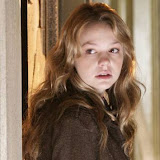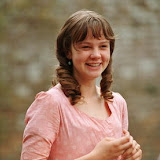
Carey Mulligan, the up and coming young actress who made such an impression in the BBC's lavish adaptation of Bleak House recently appeared in the ITV drama My Boy Jack alongside David Haig and Daniel Radcliffe. Here she talks about appearing in the production.
Carey was attracted to the character of Elsie because she did not conform to the wallflower role often written for young women in period dramas. This was a girl, barely an adult, who was fiercely protective of her little brother and was not afraid to tell her domineering father so:
“Although Elsie is dearly loved, I think it’s obvious from what you read about the Kiplings that Jack was the main focus of the family and Elsie was there to support him. After Josie died, that was Elsie’s position in the family - to be Jack’s confidant and friend.
“She’s stuck at home and a bit bored, but she loves her little brother desperately. In some of the letters to her parents I’ve read, she writes about Jack with such affection. The one thought that was in my mind the whole time was ‘she can’t lose another sibling [after Josie]’. I just don’t think she or the family can take losing another child.
“Elsie comes across as quite feisty in the film, but you get the feeling that the arguments they have are brought on by her real passionate belief that Jack shouldn’t go to war. I don’t think their lives are usually like that because it wouldn’t be proper or right for a girl of that age to argue with her father, but it is clearly something she feels she has to fight for, and the minute she has to defend something, the feistiness comes out of her.
“I’m glad Elsie is a feisty character - there are so many wallflower roles for girls in period drama but she has real guts. She’s interested in politics. She isn’t going to change the world, but she talks about the suffragettes. She’s quite forward thinking and finds it hard to sit through the speeches Rudyard makes about the war and to support a war which has been built up to be this magical, wonderful thing. She can see straight through to the reality of it, where many people didn’t. Also Elsie is very aware of how it’s going to affect her. It’s very close to home - it’s as if she knows John isn’t going to survive.
“I loved it that Elsie was not in any way two dimensional. She was a fully rounded character and had so much spirit. I loved the family, and the script was just one of the best things I’d read. I would read it on the tube on the way to rehearsals and I couldn’t get to the end of it without crying, and crying on the tube is quite embarrassing. As I said, there are so many wallflower parts but Elsie is so special. David has written a really good ‘girl’ and he really understood her. He didn’t write someone airy-fairy - he wrote someone very strong. She was much more ‘masculine’ than other girls of the time and that was really interesting. And I’ve never had a younger brother, so that was lovely.
Carey also relished the challenge of playing ‘a real person’, a first for her. She stepped into the character’s shoes with the help of letters Elsie had written to her family back in the early 1900s.
“I have never played a non-fictional character before. I read as much as I could about the Kiplings and the story of Jack. Not a great deal is written about Elsie [compared to the others], so the letters she wrote were an important insight into who she was. It’s hard because you can only do so much reading around the real person. At the end of the day you’ve got a script to follow, and there was such a clear character coming out of the script. Having said that, it’s so helpful to have those pictures in your mind about their life. They travelled so much and had such an amazing education being brought up by Rudyard. They were special children.”
Carey was both moved and enchanted by the world of the Kipling family, listening to Rudyard’s magical stories in one scene and witnessing a shell-shocked soldier’s pain in the next.
“I love the birthday party scene where Rudyard tells an audience of children a story. The extras weren’t all that interested in what David was saying because whenever Daniel (Radcliffe) walked in, all the kids were just fighting the urge to look at him. But Kim and I were grinning like idiots because David has such an amazing story-telling voice - it was magical. I also enjoyed the scene when the witness to Jack’s death tells the family what happened. I think Martin McCann is a brilliant actor. I remember at the read through, his speech towards the end of the film had most of the production in tears.
“It felt eerie filming at Bateman’s. Sometimes you’d think ‘do they actually approve of what we are doing?’ And would they be happy with the way their story is being told?’ I remember at one point Daniel grabbed my hand and took me to the house where, in the archway, all four of them had etched their names into the stone. I almost burst into tears. David (Haig) did the same thing. He took me down to the sundial where Rudyard had written ‘it’s hotter than you think’. It’s those tiny details which made it such an odd and emotional experience. It was so beautiful, sitting in the garden. It felt like their own little world - you could just imagine them all there, hidden away from everybody else and the press who hounded them.”
As eerily realistic as filming at Bateman’s was, it was the dialogue between Jack and Elsie which transported Carey to another time entirely – a time she had tried to persuade her own brother, an officer in the Territorial Army, from serving in Iraq.
“I had the exact same arguments with my brother about going to serve in Iraq last year. He was dead set on going. I tried to argue with him, I tried to make him give me solid reasons, and he could, which drove me mad. At the end of the day you’ve got to realise if someone is going to do something regardless, you’ve just got to love and support them as much as you can.
“When I read the script I recognised many of the arguments which went on in our house, and it very much mirrored the angst we all felt. Every time I switched the television on over the six months and saw images of Iraq, my heart just stopped. The fear and the waiting, that’s what people can relate to. When I read the script, I could see exactly what David was getting at. I’d been through it myself. The poems and the writing enhanced and articulated it in a different way but the sentiment was the same.
“It’s interesting because that’s what you rarely get to see in war films - the people who are left behind. Can you imagine how they got through the day? Did they wake up and write a list of things they would try and accomplish to fill their time so they didn’t have to think about it? And to be a girl of Elsie’s age… Rudyard could go off and throw himself into the war effort but the women were just left to think a lot. Elsie is so desperate to fill her day. Was Jack being horribly maimed the best they could hope for? If they had that in their mind, then god only knows how they got through each day.”
Carey’s hope for the film is a simple one – that it makes people think about a young boy who dies for a cause.
“I hope audiences are moved by Jack’s story. I hope they remember that boy, that they think about him for a while. And hopefully it will make people think about all those we have lost in war and those who have never been found. I think it’s such an accurate portrayal of living with someone who is in the army, fighting a war.
“It’ll touch people because they will see themselves in it. The overriding thing that comes out of the film, however, is that we can only show those who go to war that we love them. I think that’s what people do in real life. You can argue and worry about them all you like but, at the end of the day, all you really have to do is love them.”
My Boy Jack was broadcast on the ITV1 Network on Sunday 11 November 2007 / 9:00pm - 11:00pm
http://theuktvguide.blogspot.com/2008/01/carey-mulligan-on-my-boy-jack.html
Showing posts with label My Boy Jack. Show all posts
Showing posts with label My Boy Jack. Show all posts
Wednesday, 13 February 2008

Have you news of my boy Jack?
It's rare today - in TV's lightweight world of tacky reality shows and insignificant tittle-tattle tosh - that something reaffirms television's power to educate, shock, inform, overwhelm, grip and entertain. But My Boy Jack does just that and considerably more. One of the most potent programmes you'll see on television this year, it's so powerful that at times it's almost unbearable to watch. Seriously good, haunting TV, it will stay lodged in your memory for a long time.
Written by actor David Haig - and based on his own stage version of a true-life story - My Boy Jack reveals how author and poet Rudyard Kipling used his influence to get his 17-year-old son John (called Jack) a commission with the Irish Guards, despite his son's poor eyesight, shortly after the outbreak of the First World War.
It was a terrible mistake, for a few months later Lieutenant John Kipling was killed in action, slowly and very cruelly cut down in a hail of machine-gun bullets at the Battle of Loos in September 1915, just one day after his 18th birthday.
But that wasn't the end of it. It took Kipling and his wife Caroline years to uncover the awful truth about their son's terrible death, and they never found his body. And, understandably, it altered Kipling's attitude to a war that he had previously whole-heartedly supported and publicly promoted.
It's not just a powerful story. The casting here is carefully chosen and top-notch. Haig himself plays Rudyard Kipling, giving a bravura performance as the writer, best known for The Jungle Book and Just So Stories, but here shown in his true colours as a hectoring, lecturing, often overbearing, bombastic paterfamilias with dangerously jingoistic leanings.
Daniel Radcliffe - playing his first major role on TV since the Harry Potter film series - is superb, keeping things finely understated as young Jack, the lad who wants to break away from his father and the suffocating, privileged world of his upbringing. Rebuffed twice by two military medical boards, through his father's influence he gains a commission, then trains hard with his men, and bravely goes over the top of the trenches to meet his death. Complementing the two leads are fine support roles from Kim Cattrall (Sex and the City's Samantha Jones) as Kipling's wife Caroline and Carey Mulligan as their daughter Elsie.
The script is tight and taut, running very smoothly, the locations are beautifully shot, the attention to detail - especially the battlefield scene - is superb, and the piece is brilliantly directed and edited, building unbearably in tension. And the closing scenes, over which Haig solemnly reads Kipling's poem My Boy Jack (written after his son's death), are a masterstroke.
Appropriately scheduled for peak-time viewing on Remembrance Sunday, this is TV at its finest. Harrowing, yet essential viewing.
Paul Strange
http://forums.digiguide.com/topic.asp?id=22515
Written by actor David Haig - and based on his own stage version of a true-life story - My Boy Jack reveals how author and poet Rudyard Kipling used his influence to get his 17-year-old son John (called Jack) a commission with the Irish Guards, despite his son's poor eyesight, shortly after the outbreak of the First World War.
It was a terrible mistake, for a few months later Lieutenant John Kipling was killed in action, slowly and very cruelly cut down in a hail of machine-gun bullets at the Battle of Loos in September 1915, just one day after his 18th birthday.
But that wasn't the end of it. It took Kipling and his wife Caroline years to uncover the awful truth about their son's terrible death, and they never found his body. And, understandably, it altered Kipling's attitude to a war that he had previously whole-heartedly supported and publicly promoted.
It's not just a powerful story. The casting here is carefully chosen and top-notch. Haig himself plays Rudyard Kipling, giving a bravura performance as the writer, best known for The Jungle Book and Just So Stories, but here shown in his true colours as a hectoring, lecturing, often overbearing, bombastic paterfamilias with dangerously jingoistic leanings.
Daniel Radcliffe - playing his first major role on TV since the Harry Potter film series - is superb, keeping things finely understated as young Jack, the lad who wants to break away from his father and the suffocating, privileged world of his upbringing. Rebuffed twice by two military medical boards, through his father's influence he gains a commission, then trains hard with his men, and bravely goes over the top of the trenches to meet his death. Complementing the two leads are fine support roles from Kim Cattrall (Sex and the City's Samantha Jones) as Kipling's wife Caroline and Carey Mulligan as their daughter Elsie.
The script is tight and taut, running very smoothly, the locations are beautifully shot, the attention to detail - especially the battlefield scene - is superb, and the piece is brilliantly directed and edited, building unbearably in tension. And the closing scenes, over which Haig solemnly reads Kipling's poem My Boy Jack (written after his son's death), are a masterstroke.
Appropriately scheduled for peak-time viewing on Remembrance Sunday, this is TV at its finest. Harrowing, yet essential viewing.
Paul Strange
http://forums.digiguide.com/topic.asp?id=22515
Friday, 14 December 2007
Granada Unveils Slate for NATPE
LONDON, December 12: Granada International is heading to NATPE with a raft of new titles covering genres like comedy, entertainment, music and drama, led by the British TV movie My Boy Jack, which stars Daniel Radcliffe and Kim Cattrall.
In his first television role since Harry Potter, Radcliffe stars alongside Sex and the City’s Cattrall in the wartime drama, My Boy Jack. The 95-minute production, an Ecosse Films/WGBH Boston/Ingenious Broadcasting co-production for ITV in association with Octagon Films and Granada International, is based on the true story of Jack Kipling (played by Radcliffe), the son of British author Rudyard Kipling. After Jack becomes a soldier in WWI and goes missing, Rudyard and his wife Carre (played by Cattrall) begin their search to find their son.
David Haig (Four Weddings and a Funeral, The Thin Blue Line) stars as Rudyard Kipling, and wrote the drama, which is directed by Brian Kirk (The Tudors, Middletown) and also stars Carey Mulligan (Bleak House, Northanger Abbey). My Boy Jack recently aired in the U.K. on ITV1, and achieved a 25-percent share of viewers in a prime-time Sunday-night slot.
Other drama offerings include the 13x48-minute series Murdoch Mysteries, which is set in Toronto, Canada in the 1980s. Yannick Bisson stars as William Murdoch, a young detective who solves challenging murders using emerging and progressive forensic techniques. The series is a Shaftesbury Films production in association with CHUM Television, Granada International and UKTV. BAFTA Award-winner Victoria Wood (Housewife 49) and Emma Watson (Hermione in Harry Potter) star in the drama Ballet Shoes, from Granada for the BBC.
Other titles in Granada’s catalogue for NATPE include entertainment programming like Corteo, which features circus skills and avant-garde theatrical techniques presented by Cirque du Soleil, along with its backstage counterpart Through The Curtain. On the music and celebrity programming front, Granada will offer up The Kylie Show, Divas and Audience With Celine Dion, among others.
Additional highlights include the comedic entertainment series The Friday Night Project, which is also available as a format. Other formats from Granada’s catalogue include the cooking competition reality show Best Dish… and the game show format Born Winners. Also available from Granada at NATPE are the wildlife series Nick Baker’s Weird Creatures, the HD animated series Supernormal, the children’s series Boowa & Kwala, Hollywood TV movies like Matters of Life And Dating, the series Old Skool with Terry and Gita, as well as the popular Hell’s Kitchen series from both the U.S. and the U.K.
By Kristin Brzoznowski
http://www.worldscreen.com/newscurrent.php?filename=granada121207.htm
In his first television role since Harry Potter, Radcliffe stars alongside Sex and the City’s Cattrall in the wartime drama, My Boy Jack. The 95-minute production, an Ecosse Films/WGBH Boston/Ingenious Broadcasting co-production for ITV in association with Octagon Films and Granada International, is based on the true story of Jack Kipling (played by Radcliffe), the son of British author Rudyard Kipling. After Jack becomes a soldier in WWI and goes missing, Rudyard and his wife Carre (played by Cattrall) begin their search to find their son.
David Haig (Four Weddings and a Funeral, The Thin Blue Line) stars as Rudyard Kipling, and wrote the drama, which is directed by Brian Kirk (The Tudors, Middletown) and also stars Carey Mulligan (Bleak House, Northanger Abbey). My Boy Jack recently aired in the U.K. on ITV1, and achieved a 25-percent share of viewers in a prime-time Sunday-night slot.
Other drama offerings include the 13x48-minute series Murdoch Mysteries, which is set in Toronto, Canada in the 1980s. Yannick Bisson stars as William Murdoch, a young detective who solves challenging murders using emerging and progressive forensic techniques. The series is a Shaftesbury Films production in association with CHUM Television, Granada International and UKTV. BAFTA Award-winner Victoria Wood (Housewife 49) and Emma Watson (Hermione in Harry Potter) star in the drama Ballet Shoes, from Granada for the BBC.
Other titles in Granada’s catalogue for NATPE include entertainment programming like Corteo, which features circus skills and avant-garde theatrical techniques presented by Cirque du Soleil, along with its backstage counterpart Through The Curtain. On the music and celebrity programming front, Granada will offer up The Kylie Show, Divas and Audience With Celine Dion, among others.
Additional highlights include the comedic entertainment series The Friday Night Project, which is also available as a format. Other formats from Granada’s catalogue include the cooking competition reality show Best Dish… and the game show format Born Winners. Also available from Granada at NATPE are the wildlife series Nick Baker’s Weird Creatures, the HD animated series Supernormal, the children’s series Boowa & Kwala, Hollywood TV movies like Matters of Life And Dating, the series Old Skool with Terry and Gita, as well as the popular Hell’s Kitchen series from both the U.S. and the U.K.
By Kristin Brzoznowski
http://www.worldscreen.com/newscurrent.php?filename=granada121207.htm
Sunday, 18 November 2007
TV Review – My Boy Jack, ITV1, Sunday 11th November, 9pm
My cousin is fascinated by World War I, buys all the books and watches all the films. Down the years, thanks to her storytelling and encouragement, I've also become fascinated by this horrible war. Why? I often ask myself that question, as I'm not that keen in wars, full stop. I guess it's to do with the enormous amount of casualties, the horrifying conditions the war was fought out in, the way huge swathes of the Europe's male population were killed, and how pretty much every town and community was affected by this thing.
One man who can empathise with all these points is Rudyard Kipling. The man who wrote The Jungle Book and won the Nobel Prize for literature in 1907 couldn't do any wrong. He was married, had a big house in the country, was loved everywhere and mates with the King. Like many fathers up and down the land, his life was about to change when Britain declared war on Germany in 1914.
I'd already watched an excellent Jeremy Paxman documentary earlier in the evening on BBC1, about the inspirational World War I poet Wilfred Owen, so I was looking forward to watching My Boy Jack. All I knew about it was that David Haig was reprising his role as Rudyard Kipling from the West End play, and the cast was strong – Daniel Radcliffe, Kim Cattrell and the always-excellent Carey Mulligan (who's becoming a bit of costume drama Queen these days).
The opening sequence saw Rudyard Kipling race to some big, posh house to meet his mate the King, no less, where they had a whiskey, said pip-pip to each other and discussed the state of things, what-ho. The King asked Rudyard to go easy on his public speaking – Rud had been whipping up a fervour recently by shouting that the British Army simply wasn't ready for war, and that recruits were needed, and needed fast... so come on, what are you waiting for? It's your time to serve King and country!
The King wanted him to calm down, but Rud, patriotic veins bulging in his temples, refused and said he bally well wouldn't (or something along those posh, early 20th century language lines). We then cut to Rud's son John, or Jack, failing a medical at the Navy because of his myopia and fears from Army people that wearing spectacles may endanger himself and his fellow men.
When the family all got home to their beautiful, rural pile we were introduced to the rest of the Kipling family – Rud's wife Cassie (Cattrell) and mischievous daughter Elsie (Mulligan). Their idyllic lifestyle was laid out in front of us in all its glory – rose gardens, motorcycles in the shed, smoking rooms... the whole nine yards. Just below this surface of tranquility Rud was seething at his son's rejection and vowed to help him out by talking to a few of his influential friends down at the war office. You got the impression that he – another spectacle wearer – wanted his son to live out what he always wanted to.
Thanks to his dad's political wheeling and dealing, Jack finally got into the Army, and the fresh-faced young man (or “old man” as his dad insisted on calling him) was off to boot camp quicker than you can say, "Mr Kipling bakes exceedingly good cakes". This is when the drama started to pick up – after a slowish start I did wonder if I could feel enough for Rud to feel sorry for him. It was obvious what was going to happen – rabidly patriotic and pro-war dad (who likened Empire to 'Britain's family of nations' and the need for war as, 'the parents looking after the nation of children') tries his best to get his son into the army, son goes to war, son dies, dad feels awful.
This is pretty much what happened of course, but not before we saw Jack become a man at boot camp, return home with a 'tache and an officer's badge. There was a very moving moment when mother and son said their goodbyes before his journey to France (and impending doom). This is what these war stories are all about for me – the family relationships, how the dynamic between the mother/father and son changes, and the way, however old and mature these young men think they are, they are reduced to babies when they're forced to say goodbye. Kim Cattrell played this moment very well.
Jack Kilping was 17 years old when he went off to the front line in France. His mother and father were left at home, a once lively and colourful country paradise, now empty and foreboding. We got a glimpse of the horrors of trench warfare, but before you knew it, Jack was to go over the top... the day after his 18th birthday.
The day (and time) of the big push saw the drama produce one of its most powerful scenes. While Jack rallied his troops in the trenches – who were shaking and vomiting with fear – Rud and Cassie got out of bed and went into the garden to sit quietly in their pyjamas. Two different calms before the storm.
You just knew what was going to happen, and the next hugely powerful scene saw Rud receive a telegram at the home. The walk from his front door to the reading room, unopened telegram in his pocket, was the sort of scene where time stood still – every parent's nightmare.
Jack was pronounced missing in action, but Rud and Cassie doggedly clung to hope. While Rud slowly came to terms with his part in his son's death, Cassie was stoic and searched for answers. But the writing was on the wall – a moving testimony from a wounded soldier, who went over the top with Jack, confirmed that he did indeed die behind enemy lines.
Having read a bit more about Rudyard Kipling, commentators say that his post-war work was severely affected by what happened to his son (not least his poem, My Boy Jack). You’re not kidding! I think it would severely affect any parent who has lost a son at war, no matter what they did for a living.
So what did I think of all this? It was a fascinating story, but not up there in the top drawer of dramas, I have to admit.
The performances were all terrific, it looked lavish and the war scenes were Saving Private Ryan-esque (or as much as a TV drama can), but there was just something missing. Perhaps I didn't warm to Rud's character, perhaps both the pacing and plotting were a bit choppy and, perhaps, the story wasn’t quite as gripping as other WWI stories I’ve read.
I also have to say that there's just something different and wrong about ITV dramas. Something undefinable and slightly odd – maybe it's the commercial breaks, but I've never seen an ITV drama that's well-paced or well edited. Maybe a Cracker or a Prime Suspect, but that's about it.
But what can you do when you review a WWI drama? Criticise the plot? Have a go at a mother and father coming to terms with the loss of their son? Pour scorn on one young man's coming-of-age that, tragically, wasn't completed? Of course not. It's another hugely worthy, human story that serves to remind us how different things were then – the British stiff upper lip was in full-effect, boys and men from across the land were willing to lay down their lives unconditionally for King and country, and the glamour of war (if there is such a thing) was in stark contrast to the sickening reality.
In that respect, My Boy Jack was a moving reminder why we should all never, ever forget.
http://www.tvscoop.tv/2007/11/tv_review_my_bo.html
One man who can empathise with all these points is Rudyard Kipling. The man who wrote The Jungle Book and won the Nobel Prize for literature in 1907 couldn't do any wrong. He was married, had a big house in the country, was loved everywhere and mates with the King. Like many fathers up and down the land, his life was about to change when Britain declared war on Germany in 1914.
I'd already watched an excellent Jeremy Paxman documentary earlier in the evening on BBC1, about the inspirational World War I poet Wilfred Owen, so I was looking forward to watching My Boy Jack. All I knew about it was that David Haig was reprising his role as Rudyard Kipling from the West End play, and the cast was strong – Daniel Radcliffe, Kim Cattrell and the always-excellent Carey Mulligan (who's becoming a bit of costume drama Queen these days).
The opening sequence saw Rudyard Kipling race to some big, posh house to meet his mate the King, no less, where they had a whiskey, said pip-pip to each other and discussed the state of things, what-ho. The King asked Rudyard to go easy on his public speaking – Rud had been whipping up a fervour recently by shouting that the British Army simply wasn't ready for war, and that recruits were needed, and needed fast... so come on, what are you waiting for? It's your time to serve King and country!
The King wanted him to calm down, but Rud, patriotic veins bulging in his temples, refused and said he bally well wouldn't (or something along those posh, early 20th century language lines). We then cut to Rud's son John, or Jack, failing a medical at the Navy because of his myopia and fears from Army people that wearing spectacles may endanger himself and his fellow men.
When the family all got home to their beautiful, rural pile we were introduced to the rest of the Kipling family – Rud's wife Cassie (Cattrell) and mischievous daughter Elsie (Mulligan). Their idyllic lifestyle was laid out in front of us in all its glory – rose gardens, motorcycles in the shed, smoking rooms... the whole nine yards. Just below this surface of tranquility Rud was seething at his son's rejection and vowed to help him out by talking to a few of his influential friends down at the war office. You got the impression that he – another spectacle wearer – wanted his son to live out what he always wanted to.
Thanks to his dad's political wheeling and dealing, Jack finally got into the Army, and the fresh-faced young man (or “old man” as his dad insisted on calling him) was off to boot camp quicker than you can say, "Mr Kipling bakes exceedingly good cakes". This is when the drama started to pick up – after a slowish start I did wonder if I could feel enough for Rud to feel sorry for him. It was obvious what was going to happen – rabidly patriotic and pro-war dad (who likened Empire to 'Britain's family of nations' and the need for war as, 'the parents looking after the nation of children') tries his best to get his son into the army, son goes to war, son dies, dad feels awful.
This is pretty much what happened of course, but not before we saw Jack become a man at boot camp, return home with a 'tache and an officer's badge. There was a very moving moment when mother and son said their goodbyes before his journey to France (and impending doom). This is what these war stories are all about for me – the family relationships, how the dynamic between the mother/father and son changes, and the way, however old and mature these young men think they are, they are reduced to babies when they're forced to say goodbye. Kim Cattrell played this moment very well.
Jack Kilping was 17 years old when he went off to the front line in France. His mother and father were left at home, a once lively and colourful country paradise, now empty and foreboding. We got a glimpse of the horrors of trench warfare, but before you knew it, Jack was to go over the top... the day after his 18th birthday.
The day (and time) of the big push saw the drama produce one of its most powerful scenes. While Jack rallied his troops in the trenches – who were shaking and vomiting with fear – Rud and Cassie got out of bed and went into the garden to sit quietly in their pyjamas. Two different calms before the storm.
You just knew what was going to happen, and the next hugely powerful scene saw Rud receive a telegram at the home. The walk from his front door to the reading room, unopened telegram in his pocket, was the sort of scene where time stood still – every parent's nightmare.
Jack was pronounced missing in action, but Rud and Cassie doggedly clung to hope. While Rud slowly came to terms with his part in his son's death, Cassie was stoic and searched for answers. But the writing was on the wall – a moving testimony from a wounded soldier, who went over the top with Jack, confirmed that he did indeed die behind enemy lines.
Having read a bit more about Rudyard Kipling, commentators say that his post-war work was severely affected by what happened to his son (not least his poem, My Boy Jack). You’re not kidding! I think it would severely affect any parent who has lost a son at war, no matter what they did for a living.
So what did I think of all this? It was a fascinating story, but not up there in the top drawer of dramas, I have to admit.
The performances were all terrific, it looked lavish and the war scenes were Saving Private Ryan-esque (or as much as a TV drama can), but there was just something missing. Perhaps I didn't warm to Rud's character, perhaps both the pacing and plotting were a bit choppy and, perhaps, the story wasn’t quite as gripping as other WWI stories I’ve read.
I also have to say that there's just something different and wrong about ITV dramas. Something undefinable and slightly odd – maybe it's the commercial breaks, but I've never seen an ITV drama that's well-paced or well edited. Maybe a Cracker or a Prime Suspect, but that's about it.
But what can you do when you review a WWI drama? Criticise the plot? Have a go at a mother and father coming to terms with the loss of their son? Pour scorn on one young man's coming-of-age that, tragically, wasn't completed? Of course not. It's another hugely worthy, human story that serves to remind us how different things were then – the British stiff upper lip was in full-effect, boys and men from across the land were willing to lay down their lives unconditionally for King and country, and the glamour of war (if there is such a thing) was in stark contrast to the sickening reality.
In that respect, My Boy Jack was a moving reminder why we should all never, ever forget.
http://www.tvscoop.tv/2007/11/tv_review_my_bo.html
A Remembrance Day disservice
As ever, it was the week of the sorrow and the pity. The week on television that contains November 11 always has something that stuffs you with emotion. A boy wearing his father’s medals, an old man as straight as a Roman road in the cap of a long-amalgamated county regiment. This year, for me, it was Harry Patch, the last surviving combatant at Passchendaele. He spoke with that clear, reedy voice that surfs on the thin breath of the very old; and there was a moment when he paused and looked away, apparently caught on the wire of some flickering memory. To see the connection of this man, made venerable and precious by time, with the photographs and snatches of film from the first world war can never cease to astonish. The public interest in remembrance seems to be more intense than it was a few years ago: perhaps it’s because of the current cruel little wars, or maybe it’s the realisation that the generation who fought the second, and made the modern world, and who have always been there for us, are swiftly emigrating to that grainy other country across the Styx.
The showcase remembrance drama was My Boy Jack(Sunday, ITV1), a fictive version of the death of Rudyard Kipling’s only son at Loos just as he turned 18, and of the guilt and remorse felt by his jingoistic father. Daniel Radcliffe was rather touching as Jack, the shortsighted son of a shortsighted dad, given that he had little by way of motivation in an underwritten part in a woefully underwritten script by the actor David Haig, who himself played Kipling as a simple, childlike old duffer, awash with wholesome romance and naive patriotism – which is far less than a fraction of the truth about this complicated, immensely energetic, accomplished and inspiring man. His wife (played by Kim Cattrall) and daughter (Carey Mulligan) were written as completely modern figures who had modern feelings and put them in modern terms. It was altogether an annoyingly glib and shallow portrayal, seen with perfect hindsight. The truth was far more poignant and would have made a much better, if more complex, drama.
We were shown Jack Kipling’s heroic death, storming a machinegun that looked like something from the Thunderdome. This gave a cheap, saccharine neatness to the story, the sort of thing Kipling would have loathed. Actually, they never did find out how Jack died. There was one dubious report that he had been seen with a wounded jaw, weeping. The Kiplings spent years trying to find his grave, but never did. And that is a much more typical, tragic and universally unresolved ending. It is only with the smugness of looking back that you can see Jack Kipling’s death as ironic comeuppance for the patriotism of Rudyard. Nobody in 1914 foresaw the breadth and depth of the calamity, or the fathomless lake of grief the war would dig.
Jack was the second child Kipling lost prematurely. His adored first daughter died of pneumonia; the Just So stories were told for her. He wrote them down and published them in her memory. For Jack, he wrote his longest and least read book, a regimental history of the Irish Guards (the “Wild Geese”) in the first world war. In all its hundreds of grindingly detailed pages, Jack’s death merits only one bleakly factual line. Kipling wouldn’t give his son any special treatment in death, or single him out above anyone else’s son.
http://entertainment.timesonline.co.uk/tol/arts_and_entertainment/tv_and_radio/article2871022.ece
The showcase remembrance drama was My Boy Jack(Sunday, ITV1), a fictive version of the death of Rudyard Kipling’s only son at Loos just as he turned 18, and of the guilt and remorse felt by his jingoistic father. Daniel Radcliffe was rather touching as Jack, the shortsighted son of a shortsighted dad, given that he had little by way of motivation in an underwritten part in a woefully underwritten script by the actor David Haig, who himself played Kipling as a simple, childlike old duffer, awash with wholesome romance and naive patriotism – which is far less than a fraction of the truth about this complicated, immensely energetic, accomplished and inspiring man. His wife (played by Kim Cattrall) and daughter (Carey Mulligan) were written as completely modern figures who had modern feelings and put them in modern terms. It was altogether an annoyingly glib and shallow portrayal, seen with perfect hindsight. The truth was far more poignant and would have made a much better, if more complex, drama.
We were shown Jack Kipling’s heroic death, storming a machinegun that looked like something from the Thunderdome. This gave a cheap, saccharine neatness to the story, the sort of thing Kipling would have loathed. Actually, they never did find out how Jack died. There was one dubious report that he had been seen with a wounded jaw, weeping. The Kiplings spent years trying to find his grave, but never did. And that is a much more typical, tragic and universally unresolved ending. It is only with the smugness of looking back that you can see Jack Kipling’s death as ironic comeuppance for the patriotism of Rudyard. Nobody in 1914 foresaw the breadth and depth of the calamity, or the fathomless lake of grief the war would dig.
Jack was the second child Kipling lost prematurely. His adored first daughter died of pneumonia; the Just So stories were told for her. He wrote them down and published them in her memory. For Jack, he wrote his longest and least read book, a regimental history of the Irish Guards (the “Wild Geese”) in the first world war. In all its hundreds of grindingly detailed pages, Jack’s death merits only one bleakly factual line. Kipling wouldn’t give his son any special treatment in death, or single him out above anyone else’s son.
http://entertainment.timesonline.co.uk/tol/arts_and_entertainment/tv_and_radio/article2871022.ece
My Boy Jack [from Manchester Evening News]

JUST a reminder not to miss one of the TV dramas of the year tonight.
My Boy Jack will certainly be in the running when the awards are handed out.
In particular, David Haig as Rudyard Kipling and Harry Potter star Daniel Radcliffe as his son John – known as Jack.
“I certainly felt a lot in common with my character,” said Daniel at the Imperial War Museum screening this week.
David not only gives a superb performance as Kipling, he also wrote the drama.
“I’m more interested in the individual devastation a single loss in a war creates,” he explained.
“And the collateral damage to families, friends, relations, for generations to come.
“One single loss does that.
“On the morning of John’s death, 7,500 soldiers set off equal chain reactions, destruction within families.”
Kim Cattrall, who plays Jack’s mother Carrie, is a revelation for those who only know her through Sex And The City.
She says the story in the ITV1 drama, screened at 9pm, is just as relevant today as it was in 1915.
“I think the only thing that’s changed is that now young women are dying. It’s the sons and daughters.
“Unfortunately, we’ll never truly be rid of war.
“I think the most we can hope for is to continue to try and educate generations.”
Off screen, Kim has been trying to persuade an 18-year-old nephew not to sign up and serve in Iraq.
“And I have been anything but silent about it.”
Carey Mulligan, who plays Jack’s sister Elsie, says no acting was required for her scenes with Daniel.
“I had the exact same arguments with my brother about going to serve in Iraq last year.
“At the end of the day you’ve got to realise if someone is going to do something regardless, you’ve just got to love and support them as much as you can.
“Every time I switched the television on over the six months and saw images of Iraq, my heart stopped.
“The fear and the waiting, that’s what people can relate to.
“When I read the script, I could see exactly what David was getting at.
"I had been through it myself.
“The poems and the writing enhanced and articulated it in a different way, but the sentiment was the same.”
************************************************
My Boy Jack by Rudyard Kipling:
"HAVE you news of my boy Jack?”
Not this tide.
“When d’you think that he’ll come back?”
Not with this wind blowing, and this tide.
“Has any one else had word of him?”
Not this tide.
For what is sunk will hardly swim,
Not with this wind blowing, and this tide.
“Oh, dear, what comfort can I find?”
None this tide,
Nor any tide,
Except he did not shame his kind—
Not even with that wind blowing, and that tide.
Then hold your head up all the more,
This tide,
And every tide;
Because he was the son you bore,
And gave to that wind blowing and that tide!
***********************************************
http://blogs.manchestereveningnews.co.uk/ianwylie/2007/11/my_boy_jack.html
Sunday, 11 November 2007
In 1915 as in 2007, boy soldiers didn’t always come home [from Sunday Herald]
The Imperial War Museum in London is one of the very best museums in the country, as you can tell from the jib of its millions of visitors, from bewitched and boggle-eyed five-year-old kids to solemn German tourists to veterans spinning around in their wheelchairs, to anyone else who has a connection to any war, which is to say, pretty much everyone else on Earth.
For me, personally, it's the second world war, the war my dad served in and was a prisoner of war of the Japanese in, for three and a half years, in Burma, Bridge Over The River Kwai territory with none of the cinematography. Mum took her gas mask to school for years.
Her brother, meanwhile, the uncle I never knew, was killed on duty in the Black Watch, aged 21. As bald facts go, these unleash lifetimes of profound effect, and in the Imperial War Museum you can see, touch, imagine and hear the most minuscule echo of what some of that might have felt like: from original letters home from the PoWs of the Japanese to wandering the mocked-up ravines of the terrifying trenches; from shuffling through the reconstruction of a 1940s house to the sight of a ballistic missile, standing on end, as colossal and imposing as a rocket ship off to the moon.
You know it was all real, of course, but suddenly, it's really real. This week a press conference was held in the Imperial War Museum for the ITV drama My Boy Jack, which airs tonight, starring Daniel Radcliffe in the true story of Rudyard Kipling's teenage son, who was killed in the first world war, aged 18, in 1915.
Perched up on stage in the museum's cinema, Radcliffe sat alongside the scriptwriter and actor David Haig (Rudyard Kipling), Sex And The City's Kim Cattrall (Jack's mum, Carrie) and Bleak House actress Carey Mulligan (Jack's sister, Elsie). Here, then, as some kind of Remembrance Day tribute, are the selected conference highlights from the year in which, as an introductory big-wig from ITV had it, "there are 18-year-olds going to Iraq and still not coming back".
On the parallels between the troops in the first world war and the troops in Iraq today: Radcliffe: "I think it would be kind of arrogant of me to comment."
Haig: "I was especially interested in the individual devastation that a single loss in a war creates. The peripheral damage to families and friends, for generations to come. One single loss. On the morning of Jack's death, 7500 soldiers set off equal chain reactions of destruction."
Cattrall: "All of us, in some ways, have a connection. My grandfather served, he was gassed and I wish my father had known his father. And that maybe would've made him a different kind of dad."
On Radcliffe's great-uncle Ernie, who served at Loos, which means theoretically that Jack Kipling and great-uncle Ernie could have passed each other in the trenches: Radcliffe: "Yes, and that would be a rather remarkable coincidence. But he was one of three talismans that I had during filming. A picture of Uncle Ernie, two medals I was given as a present and a copy of Kipling's study of the Irish Guards The Irish Guards In The Great War.
"It was a pretty bizarre moment when I was told the medals had been presented to a William French, and then looked in the index in the back of Kipling's book and his name was there. You think: This man died then, at war, I don't know anything about him but he's entered my consciousness in 2007 and he entered Rudyard's 90 years ago'. And I thought that moment of shared experience was quite important."
On having a brother serve in Iraq while the character you're playing is the main family voice of dissent: Mulligan: "Yes, my brother was in the Territorial Army in Iraq for seven months, so I wasn't really acting. Funnily enough, there was a man on the news this morning, a lance-corporal, and he said he'd just come back and it was very hard because everyone was talking about The X Factor. And Emmerdale. Not that I'm blaming ITV "
On Radcliffe's interesting moustache: Radcliffe: "We filmed out of sequence, so I would've had to grow it back overnight, so it wasn't real, no. Another week and it would never have survived, it was seriously disintegrating "
As, indeed, did the rest of the press conference, which ended with The Sun wondering if Radcliffe was a Sex And The City fan (he'd never seen it) and the phenomenally successful weekly gossip bugle Grazia magazine wondering if Cattrall preferred her saucy Sex And The City outfits to the rather more austere garb of 1915. "Well," she said, "I've never been a big fan of the corset." Then the cast left, leaving us to contemplate exactly where we are nearly 100 years after the outbreak of the first world war.
"We are living in fast times," trumpets the official Grazia website, helpfully. "Life-changing news stories can gallop past us, delicious gossip can flutter and die, and fashion trends that are hot today are gone tomorrow.
"We will investigate the big issues of the week. You want to read the kind of interviews and reports that make you think seriously about your own life. There is no spin, no fluff, just straight-shooting information. Grazia: A Lot Can Happen In A Week!"
9:17pm Saturday 10th November 2007
For me, personally, it's the second world war, the war my dad served in and was a prisoner of war of the Japanese in, for three and a half years, in Burma, Bridge Over The River Kwai territory with none of the cinematography. Mum took her gas mask to school for years.
Her brother, meanwhile, the uncle I never knew, was killed on duty in the Black Watch, aged 21. As bald facts go, these unleash lifetimes of profound effect, and in the Imperial War Museum you can see, touch, imagine and hear the most minuscule echo of what some of that might have felt like: from original letters home from the PoWs of the Japanese to wandering the mocked-up ravines of the terrifying trenches; from shuffling through the reconstruction of a 1940s house to the sight of a ballistic missile, standing on end, as colossal and imposing as a rocket ship off to the moon.
You know it was all real, of course, but suddenly, it's really real. This week a press conference was held in the Imperial War Museum for the ITV drama My Boy Jack, which airs tonight, starring Daniel Radcliffe in the true story of Rudyard Kipling's teenage son, who was killed in the first world war, aged 18, in 1915.
Perched up on stage in the museum's cinema, Radcliffe sat alongside the scriptwriter and actor David Haig (Rudyard Kipling), Sex And The City's Kim Cattrall (Jack's mum, Carrie) and Bleak House actress Carey Mulligan (Jack's sister, Elsie). Here, then, as some kind of Remembrance Day tribute, are the selected conference highlights from the year in which, as an introductory big-wig from ITV had it, "there are 18-year-olds going to Iraq and still not coming back".
On the parallels between the troops in the first world war and the troops in Iraq today: Radcliffe: "I think it would be kind of arrogant of me to comment."
Haig: "I was especially interested in the individual devastation that a single loss in a war creates. The peripheral damage to families and friends, for generations to come. One single loss. On the morning of Jack's death, 7500 soldiers set off equal chain reactions of destruction."
Cattrall: "All of us, in some ways, have a connection. My grandfather served, he was gassed and I wish my father had known his father. And that maybe would've made him a different kind of dad."
On Radcliffe's great-uncle Ernie, who served at Loos, which means theoretically that Jack Kipling and great-uncle Ernie could have passed each other in the trenches: Radcliffe: "Yes, and that would be a rather remarkable coincidence. But he was one of three talismans that I had during filming. A picture of Uncle Ernie, two medals I was given as a present and a copy of Kipling's study of the Irish Guards The Irish Guards In The Great War.
"It was a pretty bizarre moment when I was told the medals had been presented to a William French, and then looked in the index in the back of Kipling's book and his name was there. You think: This man died then, at war, I don't know anything about him but he's entered my consciousness in 2007 and he entered Rudyard's 90 years ago'. And I thought that moment of shared experience was quite important."
On having a brother serve in Iraq while the character you're playing is the main family voice of dissent: Mulligan: "Yes, my brother was in the Territorial Army in Iraq for seven months, so I wasn't really acting. Funnily enough, there was a man on the news this morning, a lance-corporal, and he said he'd just come back and it was very hard because everyone was talking about The X Factor. And Emmerdale. Not that I'm blaming ITV "
On Radcliffe's interesting moustache: Radcliffe: "We filmed out of sequence, so I would've had to grow it back overnight, so it wasn't real, no. Another week and it would never have survived, it was seriously disintegrating "
As, indeed, did the rest of the press conference, which ended with The Sun wondering if Radcliffe was a Sex And The City fan (he'd never seen it) and the phenomenally successful weekly gossip bugle Grazia magazine wondering if Cattrall preferred her saucy Sex And The City outfits to the rather more austere garb of 1915. "Well," she said, "I've never been a big fan of the corset." Then the cast left, leaving us to contemplate exactly where we are nearly 100 years after the outbreak of the first world war.
"We are living in fast times," trumpets the official Grazia website, helpfully. "Life-changing news stories can gallop past us, delicious gossip can flutter and die, and fashion trends that are hot today are gone tomorrow.
"We will investigate the big issues of the week. You want to read the kind of interviews and reports that make you think seriously about your own life. There is no spin, no fluff, just straight-shooting information. Grazia: A Lot Can Happen In A Week!"
9:17pm Saturday 10th November 2007
Saturday, 10 November 2007
Carey Mulligan: All or nothing

Carey Mulligan has wanted to be an actress since she was a child. She wouldn't let her family's doubts get in the way, and now she is a shining light in the classiest of British productions. By Chloe Fox. Photograph by Poppy de Villeneuve
'As I read the script, over and over again, every time I cried,' Carey Mulligan says of the story of My Boy Jack, which documents a heartbreaking episode in Rudyard Kipling's life when his son Jack went missing during the First World War. Written by David Haig (who also stars as Kipling), the television film stars Daniel Radcliffe as Jack and Kim Cattrall as his mother, Caroline. For Mulligan, who plays Jack's beloved sister Elsie, it was an offer she couldn't refuse. 'The minute I heard I had got the part, I went to my room and highlighted all my lines, like an excited schoolgirl,' she admits.
Carey Mulligan
Having been acting for only three years, Mulligan is already one of our brightest stars. 'It's like a dream come true,' says the girl who, when she was six years old, was so inconsolable at not being allowed to join her elder brother in a school production of The King and I that she was eventually let into the chorus.
It was only the beginning of a determined battle to get her way. Ten years later, while at Woldingham School in Surrey, she went to see Kenneth Branagh play Henry V. So inspired was she by his performance that she wrote asking him to be her mentor. 'I explained that my parents didn't want me to act, but that I felt it was my vocation in life,' she says. She still has the letter she got back from Branagh's sister saying, 'Kenneth says that if you feel such a strong need to be an actress, you must be an actress.'
Two years later Mulligan was on her gap year, waiting, at the insistence of her parents (her father is a hotel management consultant, her mother a lecturer), to start at Reading University. 'It was as if I had got into an arranged marriage and the clock was ticking away,' she says. 'The only actor I had ever met in my life was Julian Fellowes, who came to do a talk at my school. I wrote to my headmistress explaining that I didn't want to go to university and wanted to get in touch with him. I knew it was a bit of a long shot, but I was desperate.'
A few weeks later Mulligan received a phone call from Fellowes's wife, Emma, asking her to a dinner they were having for young hopefuls at Le Caprice. Shortly afterwards, her new mentors told her that the director Joe Wright was looking for unknown young actresses to play Elizabeth Bennet's sisters in his production of Pride & Prejudice. Mulligan landed the role of Kitty. Her elder brother, she has since discovered, sent a text to their mother on hearing the news that read, 'Looks like we will have to eat our words.'
advertisement
Since that happy summer three years ago, Mulligan, who has the added advantage of looking like the most delicate of English roses, has been working solidly on some of the classiest British television, film and theatre productions. Her television credits include Northanger Abbey, The Amazing Mrs Pritchard and most notably Bleak House, the award-winning BBC series in which she played Ada Clare. On film she recently gave a confident turn in And When Did You Last See Your Father? But it is on stage that she has most excelled, notably in this year's sell-out Royal Court production of The Seagull, in which she played Nina to Kristin Scott Thomas's Arkadina and Chiwetel Ejiofor's Trigorin. Her reviews were certainly the stuff that careers are built on. The Daily Telegraph said she was 'quite extraordinarily radiating'; the Observer described her as 'almost unbearably affecting'; 'exquisite' was the Independent's view.
'The time I spent doing The Seagull was everything to me,' Mulligan, now 22, remembers. 'It was like falling in love with life.' In the middle of the run she was struck down with appendicitis. Having been told the recovery period was three to six weeks, she was back on stage in one, although she couldn't wear a corset because of the stitches.
Her agent had sent her the script of My Boy Jack before she finished the run but it wasn't until several weeks later that Mulligan could bring herself to think about anything else. When she did read the script she knew she had to play Elsie. 'I could relate to her in every way,' Mulligan says of her character, who is vociferously opposed to her brother going to war.
After graduating from Oxford University, Mulligan's own brother volunteered to serve with the Territorial Army in Iraq. He is now back home but, perhaps as a result of her empathy, Mulligan's presence in the film is as affecting as its subject matter. Her Elsie veers from youthful optimism to profound sadness without drawing attention to the process. It is a very accomplished performance, especially from one who has had no real training. 'I consider it a great advantage,' she smiles, 'that every job I do is like going to drama school.'
# 'My Boy Jack' is on ITV1 tomorrow
http://www.telegraph.co.uk/arts/main.jhtml?xml=/arts/2007/11/10/sm_careymulligan.xml
If you can remember [from living.scotsman.com]
My Boy Jack Sunday, ITV, 9pm Forgotten Heroes: The Not Dead Monday, Channel 4, 10pm Sold Thursday, ITV, 9pm
EVERY NEW GENERATION HAS ITS wars but there's something about the lost generation of 1914-18 which seems to resurface again and again as the ultimate symbol of the horror of military conflict. By all logic of selective human memory and the incredible changes in how wars have been fought since, it shouldn't still mean as much as it does - it's a remarkable tribute, in a shallow world, to the fierce determination of its survivors that we never forget.
And those iconic images of doomed youth swarming hopelessly over the top of the trenches keep recurring: in the 1960s, there was Oh! What a Lovely War; in the 1970s, the TV adaptation of Testament of Youth; in the 1980s, the final moments of Blackadder Goes Forth; in the 1990s, the novel Birdsong and now, perhaps, My Boy Jack.
The war scenes themselves are obviously shot on a small budget, though they do evoke the terror of the moments before an offensive. But really the power of this moving drama is in its portrayal of the home front, where families watch and wait. Those waiting for soldier Jack are not just any family but Rudyard Kipling's: hugely successful writer, friend of the king, jovial storyteller adored by children - and warmonger, whipping up national fervour to fight Germany and send Britain's boys off to the front.
Unlike today's warmongers, he put his son where his mouth was, pulling strings to get 17-year-old Jack into the army despite the boy's desperately poor eyesight. There are no happy First World War stories, so it's no spoiler to say this is something that Kipling comes to regret horribly.
I haven't mentioned so far what will be the biggest draw of My Boy Jack for most - that Daniel Radcliffe plays the son in his first TV role since appearing in the highest grossing movie series of all time. It's tempting to bill it as Harry Potter and the Trenches of Death (especially as Jack Kipling wears little round glasses), but unfair: Radcliffe's involvement may have helped to get the film a primetime slot, but he gives an excellent performance as a young man struggling in his father's shadow until, ironically, being sent to command troops in France. Radcliffe's many young fans may freak out at the sight of him smoking, drinking and wearing a dodgy moustache, but it may also bring them to an understanding of the First World War in a way school lessons never could.
It is, though, really David Haig's show. Having written and starred in the original play, then adapted it for TV, he is so steeped in the role that he is note-perfect as Kipling, by turns kind, blind, gung-ho and idealistic. Kim Cattrall as his elegant American wife (also slipping off her usual Sexpot and the City image) and rising star Carey Mulligan as his cynical, overlooked daughter are very good too.
But it's easy to get sentimental about the gallant men of a long-ago war: you can feel both sorry and superior about how they rushed off to volunteer, thinking they'd be back by Christmas having saved the jolly old Empire. It might be harder to empathise with the more recent veterans of conflicts we might disapprove of, or haven't been able to fit into a neat historical narrative. Poet Simon Armitage marks this Armistice Week with an attempt to give voice to those less familiar war stories.
While the Great War poems are about those who perished, Armitage focuses on The Not Dead who didn't return as they left. Damaged, traumatised men, trying to forget what they saw, what they did, are harder to glorify than tragic martyrs. The poems represent three (real) soldiers from three conflicts, from 78-year-old Cliff who fought in Malaya to 23-year-old Rob, recently back from Iraq. But their stories are similar and it's an affecting and troubling film.
Like Daniel Radcliffe, Kris Marshall is attempting to reinvent himself in Sold, as more than just a dopey teenage son (My Family and variations on the same role) or a dopey but techno-savvy TV advert stepdad. But he's less successful: this alleged comedy drama series about estate agents is neither funny nor believable. Marshall makes manic efforts as the amoral boss who'll commit any dirty tricks to get his commission, and makes frequent declarations like: "As from today, you're already tomorrow's yesterday's man".
But the script is flaccid and the dramatic elements just silly. The hero, Danny (Bryan Dick), is keener on solving his clients' personal problems than finding them a house, but nevertheless pulls big sales just by being so gosh-darned nice. The tone is wildly messy and the show is at least twice as long as it should be - although really I'd rather they hadn't bothered at all.
http://living.scotsman.com/tv.cfm?id=1783022007
EVERY NEW GENERATION HAS ITS wars but there's something about the lost generation of 1914-18 which seems to resurface again and again as the ultimate symbol of the horror of military conflict. By all logic of selective human memory and the incredible changes in how wars have been fought since, it shouldn't still mean as much as it does - it's a remarkable tribute, in a shallow world, to the fierce determination of its survivors that we never forget.
And those iconic images of doomed youth swarming hopelessly over the top of the trenches keep recurring: in the 1960s, there was Oh! What a Lovely War; in the 1970s, the TV adaptation of Testament of Youth; in the 1980s, the final moments of Blackadder Goes Forth; in the 1990s, the novel Birdsong and now, perhaps, My Boy Jack.
The war scenes themselves are obviously shot on a small budget, though they do evoke the terror of the moments before an offensive. But really the power of this moving drama is in its portrayal of the home front, where families watch and wait. Those waiting for soldier Jack are not just any family but Rudyard Kipling's: hugely successful writer, friend of the king, jovial storyteller adored by children - and warmonger, whipping up national fervour to fight Germany and send Britain's boys off to the front.
Unlike today's warmongers, he put his son where his mouth was, pulling strings to get 17-year-old Jack into the army despite the boy's desperately poor eyesight. There are no happy First World War stories, so it's no spoiler to say this is something that Kipling comes to regret horribly.
I haven't mentioned so far what will be the biggest draw of My Boy Jack for most - that Daniel Radcliffe plays the son in his first TV role since appearing in the highest grossing movie series of all time. It's tempting to bill it as Harry Potter and the Trenches of Death (especially as Jack Kipling wears little round glasses), but unfair: Radcliffe's involvement may have helped to get the film a primetime slot, but he gives an excellent performance as a young man struggling in his father's shadow until, ironically, being sent to command troops in France. Radcliffe's many young fans may freak out at the sight of him smoking, drinking and wearing a dodgy moustache, but it may also bring them to an understanding of the First World War in a way school lessons never could.
It is, though, really David Haig's show. Having written and starred in the original play, then adapted it for TV, he is so steeped in the role that he is note-perfect as Kipling, by turns kind, blind, gung-ho and idealistic. Kim Cattrall as his elegant American wife (also slipping off her usual Sexpot and the City image) and rising star Carey Mulligan as his cynical, overlooked daughter are very good too.
But it's easy to get sentimental about the gallant men of a long-ago war: you can feel both sorry and superior about how they rushed off to volunteer, thinking they'd be back by Christmas having saved the jolly old Empire. It might be harder to empathise with the more recent veterans of conflicts we might disapprove of, or haven't been able to fit into a neat historical narrative. Poet Simon Armitage marks this Armistice Week with an attempt to give voice to those less familiar war stories.
While the Great War poems are about those who perished, Armitage focuses on The Not Dead who didn't return as they left. Damaged, traumatised men, trying to forget what they saw, what they did, are harder to glorify than tragic martyrs. The poems represent three (real) soldiers from three conflicts, from 78-year-old Cliff who fought in Malaya to 23-year-old Rob, recently back from Iraq. But their stories are similar and it's an affecting and troubling film.
Like Daniel Radcliffe, Kris Marshall is attempting to reinvent himself in Sold, as more than just a dopey teenage son (My Family and variations on the same role) or a dopey but techno-savvy TV advert stepdad. But he's less successful: this alleged comedy drama series about estate agents is neither funny nor believable. Marshall makes manic efforts as the amoral boss who'll commit any dirty tricks to get his commission, and makes frequent declarations like: "As from today, you're already tomorrow's yesterday's man".
But the script is flaccid and the dramatic elements just silly. The hero, Danny (Bryan Dick), is keener on solving his clients' personal problems than finding them a house, but nevertheless pulls big sales just by being so gosh-darned nice. The tone is wildly messy and the show is at least twice as long as it should be - although really I'd rather they hadn't bothered at all.
http://living.scotsman.com/tv.cfm?id=1783022007
Daniel's journey of remembrance
HARRY Potter star Daniel Radcliffe is wearing his poppy with pride in remembrance of a young man killed almost a century ago.
He takes on a very different role in My Boy Jack (ITV1, Sunday, 9pm), his first major TV drama since achieving global fame in the Potter films.
Set during the First World War, it tells the true story of how Rudyard Kipling used his influence to get his 17-year-old son Jack a commission with the Irish Guards, despite his son's poor eyesight.
Jack, caught up in the euphoria of the time, was every bit as keen to do his duty in northern France, and made the ultimate sacrifice.
He went missing in action during the Battle of Loos in Sept 1915. It was eventually learned that he had been killed in the pouring rain, unable to see a thing, shot down the day after his 18th birthday.
Daniel, also 18, says he hopes Potter fans will be watching when the moving two-hour film is screened on Remembrance Sunday.
Sitting at the Imperial War Museum, in London, I asked him what he thought they might take away from watching it. "I just hope that they're moved and that it sticks with them. To me the thought of forgetting all the people that fought is terrible. It is quite upsetting.
"I feel that we need to make the effort to remember them and realise how lucky we are to not ever have to endure those conditions again. And, if people watch it, who might not have watched it otherwise, then fantastic."
The film is written by David Haig, who also plays celebrated author and poet Kipling, a superstar of his day, author of The Jungle Books and Just So stories, as well as poems, including If. Sex And The City actress Kim Cattrall is Kipling's wife, Caroline, with Carey Mulligan as Jack's sister Elsie. The TV drama is based on David's own stage play version of the story.
It has been a labour of love for him, ever since a co-star on stage mentioned his striking resemblance to Kipling. "It's a dream that has taken 22 years to realise," explains David.
"Ultimately, what I find most moving about war is not necessarily the rights and wrongs, but the fact that every single casualty is an entire family devastated forever.
20,000 men
"The chain reaction of a single death in Iraq is huge, and yet in this particular war we're talking about sometimes 20,000 men in one day.
"Rudyard never lost his faith in the rightness of the war but what he couldn't bear was the thought that the country let those boys who fought down. After the war, he wrote a two-line phrase, through the eyes of the sons who died, which is, `If any question why we died, tell them our fathers lied.'"
Daniel says: "I don't think you can help but feel parallels when you realise that boys of Jack's age are still going to war. I think the film will have resonance for that reason.
"But the tragedy isn't just about the war, it's the idea of the parents outliving the children, which is the greatest tragedy imaginable.
"The story was the first thing that attracted me to this project. It's beautifully written. I've also had a relatively long-running fascination with the First World War.
"All war is, to a certain extent, beyond anyone's imagination, but particularly what it must have felt like to be in the trenches. These were probably some of the worst conditions any human has had to deal with. You feel compelled to learn about it so that the people who went through it don't just fade away into the past."
Daniel has been making Harry Potter And The Half-Blood Prince, the sixth movie, to be released next year.
He's also "incredibly excited" about reprising his West End role in Equus on the Broadway stage next September. And My Boy Jack certainly shows there's life after the boy wizard for Daniel.
On the last day of the production, he filmed the scene where Jack leaves home to go to war. It was shot at Kipling's former home - Bateman's in Sussex - on what would have been Jack's 110th birthday.
"To be filming that scene on the day he was born was amazing. What was more significant was to do what would have been the same walk Jack did up the same pathway to leave for war.
"In the archway of the door of the house, Jack had inscribed his initials and every time I walked out of the door to do a take, I walked right past them. That was a particularly moving moment for me. To see those initials was so sad and poignant, especially knowing what we know now. It was incredibly moving."
He takes on a very different role in My Boy Jack (ITV1, Sunday, 9pm), his first major TV drama since achieving global fame in the Potter films.
Set during the First World War, it tells the true story of how Rudyard Kipling used his influence to get his 17-year-old son Jack a commission with the Irish Guards, despite his son's poor eyesight.
Jack, caught up in the euphoria of the time, was every bit as keen to do his duty in northern France, and made the ultimate sacrifice.
He went missing in action during the Battle of Loos in Sept 1915. It was eventually learned that he had been killed in the pouring rain, unable to see a thing, shot down the day after his 18th birthday.
Daniel, also 18, says he hopes Potter fans will be watching when the moving two-hour film is screened on Remembrance Sunday.
Sitting at the Imperial War Museum, in London, I asked him what he thought they might take away from watching it. "I just hope that they're moved and that it sticks with them. To me the thought of forgetting all the people that fought is terrible. It is quite upsetting.
"I feel that we need to make the effort to remember them and realise how lucky we are to not ever have to endure those conditions again. And, if people watch it, who might not have watched it otherwise, then fantastic."
The film is written by David Haig, who also plays celebrated author and poet Kipling, a superstar of his day, author of The Jungle Books and Just So stories, as well as poems, including If. Sex And The City actress Kim Cattrall is Kipling's wife, Caroline, with Carey Mulligan as Jack's sister Elsie. The TV drama is based on David's own stage play version of the story.
It has been a labour of love for him, ever since a co-star on stage mentioned his striking resemblance to Kipling. "It's a dream that has taken 22 years to realise," explains David.
"Ultimately, what I find most moving about war is not necessarily the rights and wrongs, but the fact that every single casualty is an entire family devastated forever.
20,000 men
"The chain reaction of a single death in Iraq is huge, and yet in this particular war we're talking about sometimes 20,000 men in one day.
"Rudyard never lost his faith in the rightness of the war but what he couldn't bear was the thought that the country let those boys who fought down. After the war, he wrote a two-line phrase, through the eyes of the sons who died, which is, `If any question why we died, tell them our fathers lied.'"
Daniel says: "I don't think you can help but feel parallels when you realise that boys of Jack's age are still going to war. I think the film will have resonance for that reason.
"But the tragedy isn't just about the war, it's the idea of the parents outliving the children, which is the greatest tragedy imaginable.
"The story was the first thing that attracted me to this project. It's beautifully written. I've also had a relatively long-running fascination with the First World War.
"All war is, to a certain extent, beyond anyone's imagination, but particularly what it must have felt like to be in the trenches. These were probably some of the worst conditions any human has had to deal with. You feel compelled to learn about it so that the people who went through it don't just fade away into the past."
Daniel has been making Harry Potter And The Half-Blood Prince, the sixth movie, to be released next year.
He's also "incredibly excited" about reprising his West End role in Equus on the Broadway stage next September. And My Boy Jack certainly shows there's life after the boy wizard for Daniel.
On the last day of the production, he filmed the scene where Jack leaves home to go to war. It was shot at Kipling's former home - Bateman's in Sussex - on what would have been Jack's 110th birthday.
"To be filming that scene on the day he was born was amazing. What was more significant was to do what would have been the same walk Jack did up the same pathway to leave for war.
"In the archway of the door of the house, Jack had inscribed his initials and every time I walked out of the door to do a take, I walked right past them. That was a particularly moving moment for me. To see those initials was so sad and poignant, especially knowing what we know now. It was incredibly moving."
Thursday, 12 July 2007
Radcliffe leads the way in ITV1’s dramatic autumn schedule
ITV1 is pinning its hopes on a number of new dramas to secure ratings in its autumn schedule, including a one-off about Rudyard Kipling’s son.
Harry Potter star Daniel Radcliffe will join Kim Cattrall, Carey Mulligan in My Boy Jack, an Ecosse Films production, which tells the story of how Kipling used his influence to get his 17-year-old son in the Irish Guards.
Other dramas in the channel’s autumn schedule are Sold, a comedy-drama set in an estate agents starring Kris Marshall and Anthony Head, and A Room With A View, featuring real-life father and son, Timothy and Rafe Spall.
Elsewhere in the line-up, Frankenstein gets reworked with Dr Victor Frankenstein reborn as a 21st century female biologist and Charles Dickens’ The Old Curiosity Shop gets brought to life with a cast featuring Derek Jacobi and Toby Jones.
Entertainment shows include a new series of The X Factor, with new judge Dannii Minogue and Grease is the Word’s Brian Friedman joining as the show’s creative director.
Pop star Elton John also features in the line-up, with a programme about his life and Harry Potter author J K Rowling shares her experiences writing the last book in the series with a documentary that follows her over a year.
Subscribe to:
Posts (Atom)